
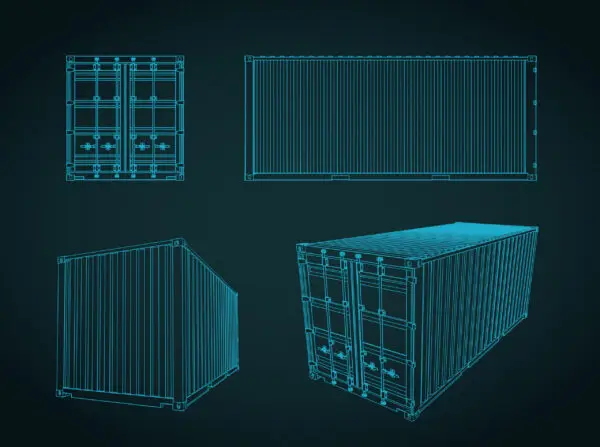
Understanding shipping container dimensions before you rent or place a container can prevent delivery problems, wasted space, and poor site planning. Whether you are storing construction materials in Scranton, business inventory in Wilkes-Barre, or household belongings elsewhere in Northeastern Pennsylvania, the container’s outside footprint, interior space, door opening, and empty weight all matter.
The most common dry shipping containers are 20-foot and 40-foot units. Standard containers are generally 8 feet wide and 8 feet 6 inches high, while high-cube containers add about one foot of height. Exact measurements can vary slightly by manufacturer and equipment type, so the dimensions of the actual unit should always be confirmed before delivery.
Standard Shipping Container Dimensions at a Glance
The figures below represent common general-purpose dry-container specifications. They are useful for planning, but individual rental containers may vary.
| Container Type | Typical Exterior Size | Approx. Interior Size | Average Empty Weight |
| 20-ft standard | 20′ L × 8′ W × 8’6″ H | 19’4″ L × 7’8″ W × 7’10” H | ~4,900 lb |
| 40-ft standard | 40′ L × 8′ W × 8’6″ H | 39’6″ L × 7’8″ W × 7’10” H | ~8,200 lb |
| 40-ft high cube | 40′ L × 8′ W × 9’6″ H | 39’6″ L × 7’8″ W × 8’10” H | ~8,600 lb |
The usable interior is slightly smaller than the exterior because of the walls, frame, flooring, doors, and structural components. Door openings are also smaller than the container’s full exterior width and height.
20-Foot Shipping Container Dimensions
A standard 20-foot container has an exterior footprint of approximately 20 feet long by 8 feet wide and stands about 8 feet 6 inches high. Inside, usable dimensions are roughly 19 feet 4 inches long, 7 feet 8 inches wide, and 7 feet 10 inches high.
When a 20-Foot Container Makes Sense
A 20-foot footprint can work well when the available site space is limited or storage needs are moderate. Typical uses can include tools, renovation materials, furniture, seasonal inventory, and contractor supplies.
For properties in Northeastern Pennsylvania, the shorter footprint may also make placement easier on tighter driveways, smaller commercial lots, or active construction sites. Delivery access still needs to be evaluated before the unit arrives.
40-Foot Shipping Container Dimensions
A standard 40-foot container is approximately 40 feet long, 8 feet wide, and 8 feet 6 inches high externally. Its usable interior is approximately 39 feet 6 inches long, 7 feet 8 inches wide, and 7 feet 10 inches high.
A 40-foot high-cube container maintains approximately the same length and width but increases exterior height to 9 feet 6 inches. That extra vertical clearance can be valuable when storing bulky items, stacked materials, or high-volume commercial inventory.
20-Foot vs. 40-Foot Containers: What Changes?
The biggest difference is usable volume and the amount of ground space required. A 40-foot container provides roughly twice the length of a 20-foot unit, but it also needs a longer placement area and adequate delivery clearance.
Container selection should not be based on volume alone. Consider the shape of the items being stored, how frequently you need to access them, how the contents will be organized, and whether the delivery vehicle can safely reach the proposed location.
How Much Does a Shipping Container Weigh?
Shipping container weight matters when planning delivery, evaluating the placement surface, and determining whether the site has adequate access.
Industry specifications show an average empty—or tare—shipping container weight of approximately 4,900 pounds for a 20-foot standard dry container, about 8,200 pounds for a 40-foot standard unit, and around 8,600 pounds for a 40-foot high cube.
These are average figures rather than guaranteed weights for every container. Manufacturer, age, flooring, doors, modifications, and container type can all affect the actual tare weight. For projects where weight is critical, verify the specification plate on the individual unit.
Why Container Dimensions Matter Before Delivery in Northeastern PA
The container itself is only part of the required space. A delivery truck also needs room to approach the property, position the unit, and safely complete the drop-off.
Before scheduling storage in Scranton, Dunmore, Wilkes-Barre, Stroudsburg, or another Northeastern Pennsylvania community, check:
- driveway or parking-lot width and length;
- overhead wires, branches, signs, or roof overhangs;
- gates, fences, parked vehicles, and tight turns;
- slope and stability of the placement surface;
- enough clearance to fully open the container doors;
- continued access for eventual pickup.
Keystone Container states that its storage containers can typically be positioned in driveways, parking lots, or directly on job sites.
Choosing the Right Container for Storage
Start with what needs to be stored rather than choosing a container based only on its length. A homeowner renovating several rooms may have very different requirements from a contractor storing equipment or a business managing seasonal inventory.
Measure the Largest Items First
Measure bulky furniture, machinery, pallets, shelving, building materials, or other large items before choosing a unit. Remember that an item must fit through the door opening, not simply inside the overall interior space.
Plan for Access, Not Just Capacity
Packing every available inch may maximize capacity, but it can make frequently used items difficult to reach. If you need regular access to tools, supplies, or inventory, leave an aisle and organize items according to how frequently they will be used.
Confirm the Actual Rental Container
Standard shipping container dimensions are an excellent planning reference, but actual equipment can vary slightly. If your property has tight clearance or your stored items are unusually large, confirm the available container’s exact dimensions before delivery.
Frequently Asked Questions
What are the normal dimensions of a shipping container?
The most common standard dry containers are approximately 20 or 40 feet long, 8 feet wide, and 8 feet 6 inches high. High-cube containers are commonly 9 feet 6 inches high.
What are the dimensions of a 40-foot shipping container?
A standard 40-foot container is approximately 40′ × 8′ × 8’6″ externally. A 40-foot high-cube container is approximately 40′ × 8′ × 9’6″.
What are the dimensions of a 20-foot shipping container?
A typical 20-foot standard container measures approximately 20′ × 8′ × 8’6″ externally, with slightly smaller usable interior dimensions.
What is the difference between a 20-foot and 40-foot container?
A 40-foot container provides considerably more storage volume but requires a longer placement area and additional delivery space. A 20-foot container may be easier to position on smaller residential or commercial properties.
How much does a shipping container weigh empty?
The average shipping container weight is approximately 4,900 pounds for a standard 20-foot container and about 8,200 pounds for a standard 40-foot container. Actual tare weight varies by individual unit.
Shipping Container Dimensions and Storage Service in Northeastern PA
Understanding shipping container dimensions before delivery helps you choose usable storage space, confirm clearance, and avoid placement problems at your home, business, or job site. For customers in Northeastern Pennsylvania, Keystone Container delivers secure storage containers directly to residential, commercial, and construction properties and offers both short- and long-term rental options.
Keystone Container serves Lackawanna, Luzerne, Monroe, Northampton, Wayne, Pike, Carbon, Wyoming, and Susquehanna counties. That coverage supports storage needs around Scranton, Dunmore, Wilkes-Barre, Hazleton, Stroudsburg, and communities throughout the surrounding region. Because the company operates from Dunmore and has served Northeastern PA for more than 20 years, its team brings local experience to residential, commercial, and job-site storage projects.
That local experience, combined with direct-to-site delivery, weather-resistant storage options, flexible rental periods, and help selecting an appropriate container, makes Keystone Container a strong local choice when you need dependable on-site storage.
Before scheduling delivery, confirm the exact size and shipping container weight of the available unit for your property. Reach out to Keystone Container to discuss your storage needs and service location.
